
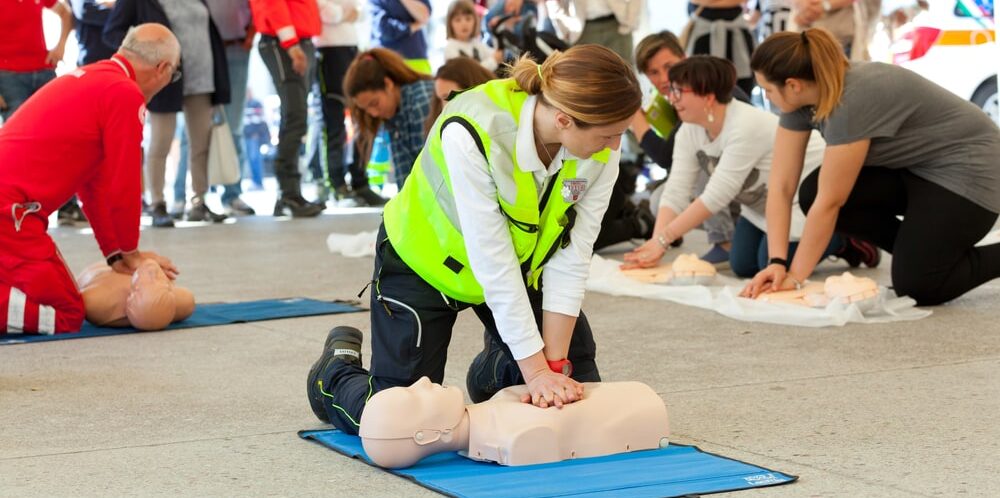
Immediate first aid can often mean the difference between life and death. From cardiac arrest to choking or excessive bleeding, timely intervention can dramatically increase survival rates.
That’s why understanding the Goals of First Aid Training is so crucial – not only for healthcare professionals but for everyone.
First aid knowledge can be the difference between life and death, from workplace accidents, a sports injury, or a sudden medical emergency at home.
At its core, first aid isn’t about replacing professional medical care – it’s about providing immediate, effective assistance at the scene of an emergency until advanced help can arrive.
Through proper training, you gain the knowledge, skills, and confidence to act swiftly and calmly when every second counts.
First Aid | The Primary Objectives
The Goals of First Aid Training are built around three essential objectives that guide every response in an emergency:
- Preserve Life
- Prevent Deterioration
- Promote Recovery
These principles form the foundation of an effective first aid response.
Let’s explore each one in detail:
1. Preserve Life
The first and foremost goal of first aid is to preserve life. Whether it’s performing Cardiopulmonary Resuscitation (CPR), clearing a blocked airway, or stabilizing someone after an accident, your role as a first-aider is to keep the person alive until medical help arrives.
Managing a choking incident is an example of a situation that can escalate quickly without warning. First aid maneuvers can help dislodge the obstruction, potentially saving a life.
Preserving life includes:
- Ensuring safety for both the victim and responder before providing aid.
- Performing the A-B-C check: Airway, Breathing, and Circulation, to maintain vital functions.
- Acting swiftly and decisively to restore breathing or circulation if needed.
In AIP Safety’s certified training courses, you’ll learn to perform CPR, use an Automated External Defibrillator (AED), and manage airway emergencies confidently – key components in preserving life.
2. Prevent Deterioration
The next objective of first aid is to prevent the person’s condition from worsening. Quick, knowledgeable action can stabilize the victim and reduce the severity of injuries before professional medical assistance arrives.
For example:
- Stopping bleeding using direct pressure or bandages.
- Immobilizing fractures or dislocations to prevent further injury.
- Moving a person to safety when they’re in immediate danger (such as fire, traffic, or electrical hazards).
- Monitoring vital signs continuously to detect changes in condition.
- Physical stabilization helps the victim be positioned correctly (recovery position) if they’re unconscious or not breathing.
- Reassuring or calming someone when they have an injury can help decrease their heart rate and blood pressure.
- Maintaining body temperature by keeping the victim warm (if appropriate for the injury or situation) which can prevent shock.
By learning these preventive techniques through structured First Aid Training, individuals are empowered to respond effectively and minimize harm – a critical part of the Goals of First Aid Training.
3. Promote Recovery
Beyond preserving life and preventing further injury, first aid also aims to promote recovery. Once the immediate danger has passed, the focus shifts to helping the person heal and remain comfortable until professional care takes over.
This involves:
- Cleaning and dressing wounds to prevent infection.
- Providing comfort and reassurance which plays an important psychological role in recovery.
- Monitoring the individual’s condition and encouraging rest.
- Offering pain relief (if appropriate and safe).
- Encourage a calm environment, including minimizing noise and distractions from crowds, which promotes psychological and physical recovery.
- Keep the person hydrated. Giving the person small sips of water can help with recovery (depending on the injury or situation).
- Limit unnecessary handling (excessive movements can lead to discomfort or delayed healing.)
Promoting recovery also means ensuring the victim feels supported – both physically and emotionally. Calm, compassionate care can make a significant difference in how quickly a person recovers from shock or trauma.
First Aid | The Significance & Long-term Effect
The Goals of First Aid Training go far beyond emergency response – they foster a culture of safety, confidence, and preparedness across homes, workplaces, and communities.
Here’s why first aid training is so significant:
- Immediate Response Saves Lives – Quick, informed action prevents conditions from worsening and can double survival rates in certain emergencies.
- Bridges the Gap to Professional Care – First aid stabilizes victims, buying valuable time until emergency responders arrive.
- Builds Confidence and Reduces Panic – Knowing how to act during a crisis encourages calm, effective decision-making.
- Promotes Safer Workplaces and Communities – Widespread first aid knowledge reduces overall accident severity and enhances collective safety.
- Meets Legal and Workplace Safety Requirements – Many industries require certified first aiders on-site to comply with occupational health and safety regulations.
- Empowers Individuals – Training transforms bystanders into capable responders who can make a life-saving difference.
Importance of CPR and AED knowledge
Performing CPR and using an AED can save lives. When a person’s heart stops, immediate CPR can double or triple the chances of survival when experiencing cardiac arrest. Next, it’s important to know how to use an AED machine properly. Using an AED machine is a safe and effective device that delivers a shock to restart a person’s heart.
Using an AED machine as soon as possible is key, as CPR brings circulation to the brain and other vital organs but an AED restarts a heart in cardiac arrest. Learn the three basic steps of using an AED and practice on a CPR manikin.
Who Should Take First Aid Training?
Everyone can benefit from learning first aid — because emergencies can happen anywhere, anytime. However, it’s particularly important for:
- Parents, caregivers, and teachers who oversee children.
- Construction, industrial, and office workers for workplace safety compliance.
- Coaches, fitness instructors, and outdoor enthusiasts who manage physical activities or remote situations.
- Community volunteers and healthcare professionals who may be first on the scene.
Whether for professional development or personal preparedness, understanding the Goals of First Aid Training empowers you to protect yourself and others.
Benefits of First Aid Training for Workplaces and Families
There are many benefits to first aid training for employees and families. Boosting confidence in workplaces and at home is one of the primary benefits of getting certified. At home, the Level C First Aid certification covers choking and CPR for children and babies.
This is essential training for parents, babysitters, teachers and other caregivers. In the workplace, employees trained in first aid can increase morale at work, developing a sense of responsibility and care, knowing someone is trained to help in an emergency situation, including falls, bleeding injuries (cuts, punctures, lacerations), or cardiac arrests.
How First Aid Training Builds Confidence During Emergencies
First aid training can build confidence during emergencies by eliminating the panic response that happens when people don’t know what to do. Training redirects panic into action. An individual trained in first aid learns to assess, act, and take control of the situation. Knowing how to stabilize a victim, telling someone to call 911, and starting compressions or using an AED is essential for that victim to recover quickly. Confidence builds from learning the different first aid techniques that we offer, from CPR to wound care.
Why First Aid Certification Matters for Workplace Safety
It’s important to have employees who know how to perform first aid at work because any industry or person can be affected. Workplace accidents and emergencies can happen anywhere and at any time, in the construction industry and office spaces. Certified first aid individuals are trained to respond to workplace emergencies, such as cardiac arrest or bleeding injuries. Workplace first aid training in Calgary is essential for a safe and responsive workplace. While falls and slips from ladders and scaffolding in the construction industry are common workplace injuries, a first-aider can also encounter many different workplace incidents, such as cardiac arrest and choking.
First Aid Training in Calgary | Train with AIP Safety
AIP Safety’s First Aid Training in Calgary equips participants with essential life-saving skills, from CPR and AED use to wound management and injury prevention. Whether you’re an individual learner or a business seeking workplace certification, AIP’s hands-on approach ensures every participant leaves confident and capable.
Our certified instructors provide a comprehensive 8-hour AED, CPR, and Emergency First Aid program that meets OH&S (Occupational Health & Safety) regulations and exceeds industry standards. You’ll gain real-world experience through interactive lessons, practical exercises, and realistic emergency scenarios.
Become a Certified Lifesaver Today
Don’t wait until an emergency happens to realize the value of first aid. Enroll in AIP Safety’s First Aid Training in Calgary and gain the confidence, skills, and certification to respond effectively when it matters most.
FAQ: First Aid Training & Certification
1. How long does a First Aid course take?
Depending on the course level, AIP Safety’s training can range from 6 to 16 hours. For example, Standard First Aid typically spans two days (16 hours), while Emergency First Aid can be completed in one day (6-8 hours).
2. Do I receive certification after the course?
Yes! Successful participants receive a First Aid Certification valid for three years, recognized across Canada.
3. Who provides First Aid Training in Calgary?
AIP Safety offers comprehensive, certified first aid courses led by experienced instructors. Programs include Emergency First Aid, Standard First Aid with CPR & AED, Oxygen Administration, and Fentanyl Awareness.
4. Can you provide on-site training for businesses?
Absolutely. AIP Safety offers convenient on-site training for corporate groups, which are ideal for workplaces that require certified employees to meet OH&S standards.
5. What are the benefits for businesses?
First aid training enhances employee safety, reduces injury severity, ensures compliance with legal standards, and builds confidence during workplace emergencies.
6. How long is first aid certification valid?
The first aid training certification is valid for three years and is recognized across Canada. It serves as proof of training and can be used to meet workplace requirements or personal preparedness goals.
7. Who should take first aid training?
It’s a great idea for everyone to have first aid training, from individuals who want to be prepared for emergencies at home or in public to employees who require certification for workplace safety compliance. Specific courses are also available for healthcare professionals and those in high-risk occupations.
8. Is CPR included in first aid courses?
CPR is built into two of our core first aid courses (Emergency and Standard). The specialty courses (Fentanyl Awareness and Oxygen Awareness) are standalone topics without CPR.
9. How long does a first aid course take?
The duration of first aid courses varies depending on the type of course. Standard First Aid typically takes two days (16 hours) to complete, while Emergency First Aid and CPR courses can be completed in 6-8 hours. Advanced courses may take longer, depending on the curriculum.
10. Why is first aid training important in workplaces?
First aid training helps businesses keep employees safe and meet occupational health and safety regulations. It prepares staff to handle workplace emergencies, reduces the severity of injuries, and can lower insurance costs. Well-trained employees can respond quickly and efficiently in emergencies, potentially saving lives and minimizing downtime.